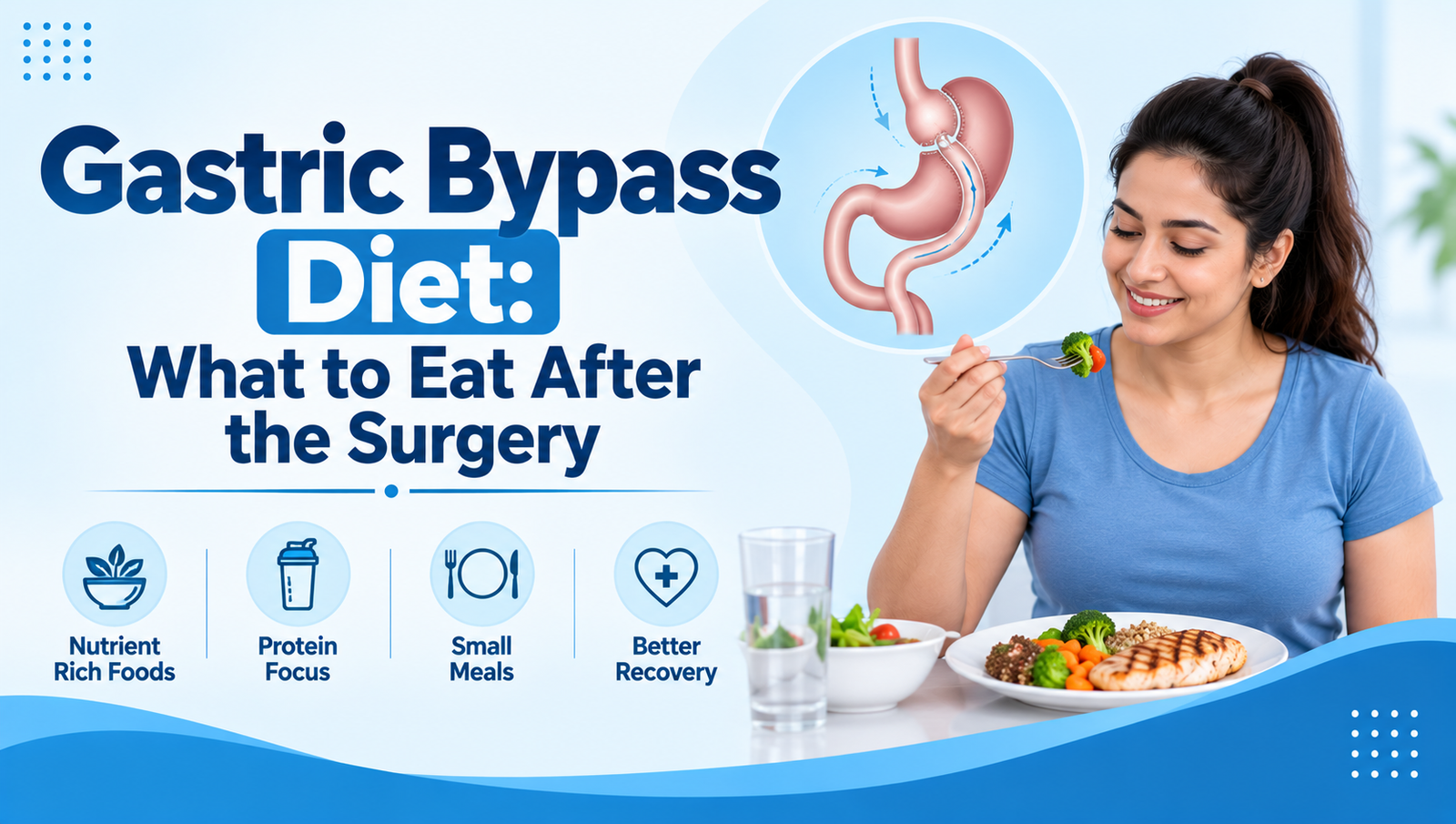
After gastric bypass surgery, your diet progresses through strict phases from clear liquids to pureed foods, soft solids, and eventually regular healthy foods. Bariatric surgery changes how much food your stomach can hold and how your body processes nutrients, so following the right bariatric surgery diet is important for recovery and long-term weight management.
The post bariatric surgery diet focuses on small portions, adequate protein, proper hydration, and essential vitamins and minerals. Your surgeon or dietitian will guide you through each stage based on your recovery and nutritional needs.
What Is a Gastric Bypass Diet?
A gastric bypass diet is a structured eating plan followed after Roux-en-Y gastric bypass surgery. Since the stomach pouch is much smaller and part of the small intestine is bypassed, you need to eat smaller portions and focus on nutrient-dense foods.
The diet generally progresses through several stages:
-
Clear liquids
-
Full liquids
-
Pureed or blended foods
-
Soft foods
-
Regular nutritious foods
Your bariatric team will determine when you should move from one stage to the next.
What to Eat After Gastric Bypass Surgery?
After gastric bypass surgery, your diet progresses through four stages. Each stage introduces different food textures and helps your digestive system gradually adjust to smaller portions.
Stage 1: Clear Liquids
Immediately after surgery, you will usually start with small amounts of clear liquids.
Examples include:
-
Water
-
Clear broth
-
Sugar-free beverages
-
Diluted, unsweetened drinks
-
Sugar-free gelatin
Stage 2: Full Liquids
Once clear liquids are tolerated, you may gradually move to thicker, protein-rich liquids.
Examples include:
-
Protein shakes
-
Low-fat milk
-
Smooth yogurt
-
Strained soups
-
Protein drinks
Stage 3: Pureed and Soft Foods
As your recovery progresses, soft and pureed foods can be introduced gradually.
Examples include:
-
Mashed eggs
-
Pureed vegetables
-
Soft fish
-
Mashed lentils
-
Smooth yogurt
-
Soft tofu or paneer
Stage 4: Regular Healthy Foods
Once your surgeon allows regular foods, focus on small portions of nutrient-rich foods.
Choose:
-
Eggs, fish, and lean chicken
-
Tofu and low-fat paneer
-
Cooked vegetables
-
Soft fruits
-
Beans and lentils
-
Whole grains in small portions
At this stage, your bariatric meal plan should prioritize protein, hydration, and nutrient-dense foods. Eat slowly, chew food thoroughly, and stop eating when you feel comfortably full.
Gastric Bypass Diet: Foods to Avoid or Limit
Some foods may be difficult to tolerate after surgery, while foods high in sugar or unhealthy fats can make it harder to maintain healthy weight loss.
Try to limit or avoid:
-
Sugary drinks and juices
-
Sweets and desserts
-
Fried and greasy foods
-
Highly processed snacks
-
Large portions of refined carbohydrates
-
Carbonated beverages, if advised by your bariatric team
-
Alcohol unless your doctor specifically advises otherwise
High-sugar foods can also contribute to dumping syndrome, which may cause symptoms such as abdominal discomfort, nausea, sweating, dizziness, or diarrhea after eating.
What Can You Never Eat Again After Gastric Bypass?
A common question patients ask is, “What can you never eat again after gastric bypass?” There is not necessarily one universal list of foods that every patient must permanently avoid.
However, some foods may remain difficult to tolerate, while high-sugar and high-fat foods are generally best limited. Large portions can also cause discomfort because the stomach pouch is much smaller.
Over time, many people can enjoy a wider variety of nutritious foods in small portions. Your tolerance will depend on your surgery, recovery, and individual response to different foods.
Bariatric Meal Plan: What Might a Day Look Like?
A bariatric meal plan should be personalized according to your stage of recovery, nutritional requirements, and medical condition.
A general example after you have progressed to regular foods could include:
|
Meal |
Example |
|
Breakfast |
Egg or Greek yogurt |
|
Mid-morning |
Small portion of soft fruit |
|
Lunch |
Lean chicken/fish or dal with cooked vegetables |
|
Evening |
Unsweetened yogurt or another protein-rich option |
|
Dinner |
Tofu/paneer, fish, or another lean protein with vegetables |
This is only a general example. Portion sizes and food choices should be adjusted according to your bariatric team's recommendations.
Gastric Sleeve Diet vs Gastric Bypass Diet
A gastric sleeve diet and gastric bypass diet have several similarities. Both typically involve gradually progressing from liquids to soft and then regular foods, with an emphasis on protein, hydration, and nutrient-dense meals.
However, gastric bypass changes the digestive pathway and can affect the absorption of certain nutrients. For this reason, nutritional monitoring and prescribed vitamin and mineral supplementation are particularly important after gastric bypass.
Important Nutrition Tips After Gastric Bypass
Following a few basic eating habits can make the transition easier:
-
Eat small meals and stop when you feel full.
-
Eat slowly and chew food thoroughly.
-
Prioritize protein at meals.
-
Drink enough fluids throughout the day.
-
Avoid drinking sugary beverages.
-
Follow your prescribed vitamin and mineral supplements.
-
Introduce new foods gradually.
-
Attend regular follow-up appointments.
The American Society for Metabolic and Bariatric Surgery recommends staying well hydrated and getting adequate protein, while lifelong vitamin and mineral supplementation is generally required after bariatric surgery.
Why Are Vitamins and Minerals Important?
Gastric bypass can affect how your body absorbs certain nutrients. Depending on your individual needs, your healthcare team may recommend supplements such as a multivitamin, vitamin B12, iron, calcium, and vitamin D.
Do not start, stop, or change supplements without discussing them with your doctor or dietitian. Regular blood tests may also be recommended to monitor nutritional status.
When Should You Contact Your Doctor?
Contact your bariatric surgery team if you experience persistent vomiting, difficulty swallowing, severe abdominal pain, dehydration, ongoing diarrhea, or difficulty tolerating food or fluids.
Nutritional deficiencies can also develop after bariatric surgery, making regular medical and nutritional follow-up important.
Conclusion
Following the right diet after gastric bypass surgery is an important part of recovery and long-term weight management. Gradually progressing through each food stage, choosing protein-rich foods, staying hydrated, and taking prescribed supplements can help meet your nutritional needs.
Since dietary requirements vary from person to person, your post bariatric surgery diet and bariatric meal plan should be followed under professional guidance. Dr. Rajesh, one of the best General Surgeons in Gurgaon, provides expert guidance for bariatric surgery, nutrition, and follow-up care to support your weight management journey.
Frequently Asked Questions
1. What can I eat immediately after gastric bypass surgery?
Most patients initially follow a liquid diet and gradually progress to pureed, soft, and regular foods as advised by their bariatric team.
2. How much protein should I eat after gastric bypass?
Many bariatric programs recommend around 60–100 grams of protein per day, but your individual requirement should be determined by your healthcare team.
3. What can you never eat again after gastric bypass?
There is no universal list of foods that everyone must permanently avoid. However, foods high in sugar and fat are generally best limited, and some foods may remain difficult to tolerate.
4. Can I eat rice after gastric bypass?
Rice may be reintroduced when your diet has progressed to regular foods, but tolerance varies. Start with a small portion and follow your surgeon or dietitian's advice.
5. Is a gastric sleeve diet the same as a gastric bypass diet?
Both diets generally emphasize small portions, protein, hydration, and gradual food progression. However, gastric bypass can have a greater effect on nutrient absorption, so nutritional monitoring is especially important.
6. How long do I need to follow a post bariatric surgery diet?
Diet progression usually occurs over several stages during the weeks following surgery. Long-term eating habits remain important, but the exact timeline varies by procedure and individual recovery.
7. Can I drink coffee after gastric bypass?
Ask your bariatric team when and whether caffeinated beverages can be reintroduced. Some programs recommend avoiding or limiting caffeine during the early recovery period.
8. Do I need vitamins after gastric bypass surgery?
Yes. Vitamin and mineral supplements are generally an important long-term part of care after gastric bypass because nutrient absorption can be reduced.
9. Can I eat sweets after gastric bypass?
Sugary foods should generally be limited. Large amounts of sugar can contribute to dumping syndrome and may also make long-term weight management more difficult.
10. Who can help create a bariatric meal plan?
A bariatric surgeon and registered dietitian can create a personalized bariatric meal plan based on your surgery, nutritional needs, medical conditions, and stage of recovery.