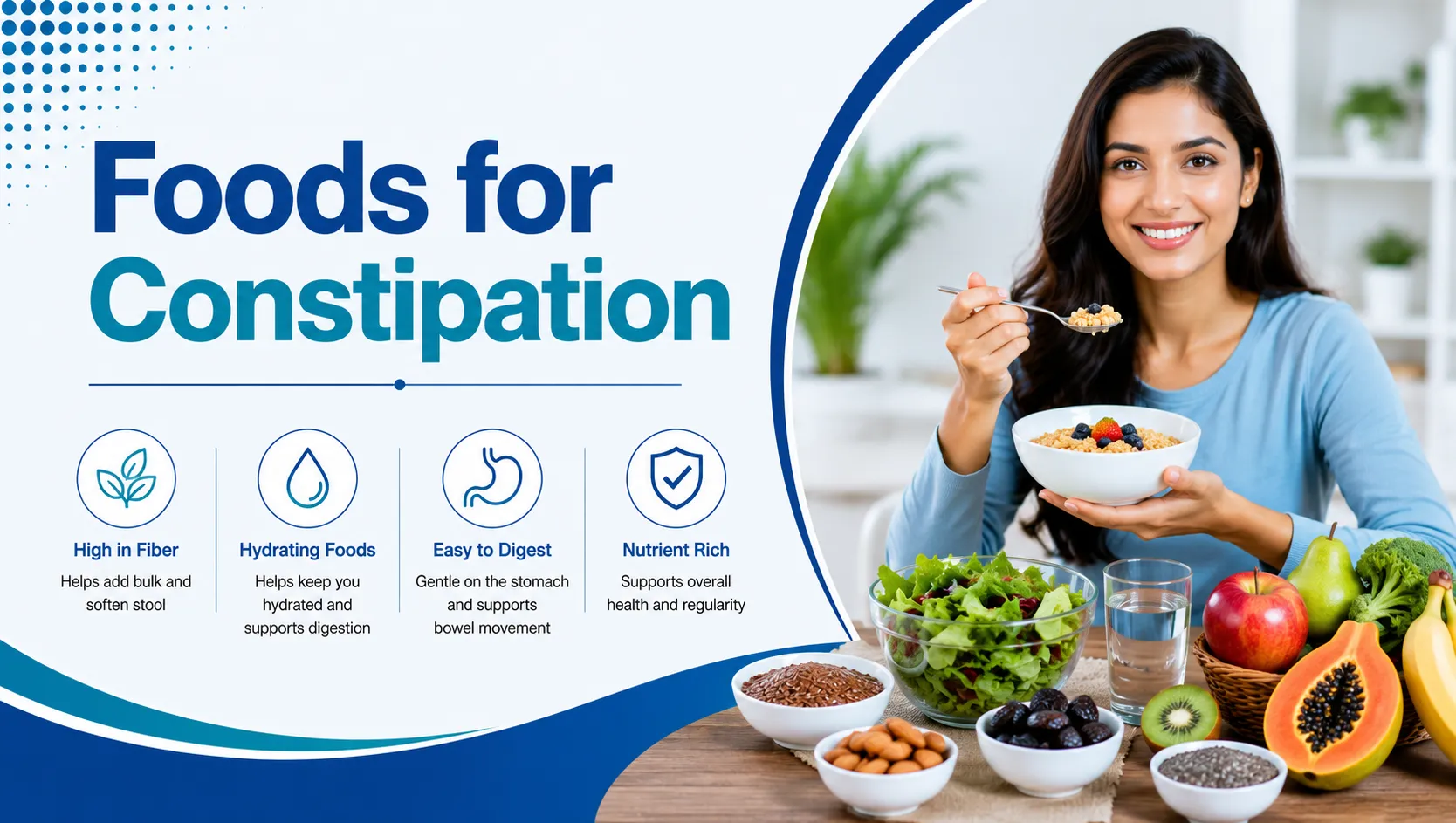
Constipation is a common digestive problem that can make bowel movements difficult, infrequent, or uncomfortable. It often causes symptoms such as hard stools, bloating, abdominal discomfort, and a feeling of incomplete evacuation. While occasional constipation is usually not a cause for concern, persistent symptoms can affect your daily routine and overall quality of life.
If you're wondering how to relieve constipation or looking for simple ways to improve your digestive health, your diet may play an important role. Certain foods are naturally rich in fiber, water, and other nutrients that support healthy digestion and regular bowel movements. In this article, we'll explore the best foods for constipation relief, natural laxatives that may help, foods to avoid when constipated, and practical tips to support long-term digestive health.
What Is Constipation?
Constipation is a common digestive condition in which bowel movements become less frequent, difficult to pass, or uncomfortable. It is generally characterized by having fewer than three bowel movements per week, passing hard or dry stools, or needing to strain during bowel movements. In some cases, constipation may also cause bloating, abdominal discomfort, and a feeling that the bowel has not been completely emptied.
Common Causes of Constipation
Constipation can occur for several reasons, including:
-
A low-fiber diet
-
Not drinking enough water
-
Lack of regular physical activity
-
Changes in daily routine or travel
-
Certain medications
-
Underlying digestive disorders
Understanding the cause of constipation is important because it can help determine the most effective approach for relief. In many cases, simple dietary and lifestyle changes can play a significant role in improving bowel regularity and supporting overall digestive health.
How Does Food Help Constipation?
Many people looking to help with constipation are surprised to learn about the varying ways that foods interact with the body. Food that increases stool bulk is one way to help the issue, while another draws water into the stool, making the stool easier to pass.
Foods that contain water and balance out dietary fiber (and other compounds) aid in digestion and help decrease the need for medication to stimulate bowel movements.
Best Foods for Constipation Relief
Prunes
Prunes are often considered one of the most effective foods for constipation relief.
They contain fiber as well as sorbitol, a natural sugar alcohol that helps draw water into the intestines and soften stool.
Adding a few prunes to your daily diet may help improve bowel regularity.
Kiwi
Kiwi is increasingly recognized for its digestive benefits.
It contains fiber and natural enzymes that may support bowel movements and improve stool consistency.
Some studies suggest that eating one to two kiwis daily may help people with mild constipation.
Pears
Pears provide both fiber and water, making them helpful for digestive health.
They also contain sorbitol, which may help support natural bowel movements.
Apples
Apples contain soluble fiber called pectin, which helps improve stool consistency and supports healthy digestion.
Eating apples with the skin provides additional fiber.
Flaxseeds
Flaxseeds are rich in fiber and may help increase stool bulk.
They can be added to yogurt, smoothies, oatmeal, or salads for an easy fiber boost.
Chia Seeds
Chia seeds absorb water and form a gel-like texture that can help soften stool and support regular bowel movements.
Oats
Oats are an excellent source of soluble fiber.
Including oatmeal at breakfast can be a simple way to increase daily fiber intake and improve bowel regularity.
Natural Laxatives That May Help
A lot of people seek natural remedies for laxatives before deciding on medications.
Certain foods that naturally stimulate stool movements are:
-
Prunes
-
Kiwi
-
Pears
-
Flaxseeds
-
Chia seeds
-
Figs
-
Papaya
Contrary to stimulant laxatives, foods aid digestion in a more gentle manner and are often included as part of a routine diet.
Foods That Act as a Natural Stool Softener
The presence of hard stools is a frequent reason why people experience constipation.
Certain foods could function as natural stool softeners, increasing the water content of the intestines and assisting stool to retain water.
Examples include:
-
Prunes
-
Pears
-
Oranges
-
Watermelon
-
Cucumber
-
Chia seeds
-
Flaxseeds
Consuming plenty of water along with these meals is also essential for optimal results.
What Foods Help With Constipation Immediately?
One of the most common questions people ask is "what foods help with constipation immediately?" While no food works instantly for everyone, certain options such as prunes, kiwi, warm water, soaked chia seeds, and high-fiber fruits may help stimulate bowel movements more quickly than others.
Examples include:
-
The juice of prunes, or the Prunes
-
Hot water to drink in the early morning
-
Kiwi
-
Coffee (for certain people)
-
High-fiber fruits
-
Chia seeds soak in water
The impact varies from person to person based on the amount of fluids consumed and digestive health. The root cause of constipation.
High-Fiber Foods That Support Regular Bowel Movements
Fiber plays a key role in preventing constipation.
Some fiber-rich foods include:
Fruits
-
Apples
-
Pears
-
Guava
-
Berries
-
Oranges
Vegetables
-
Broccoli
-
Carrots
-
Spinach
-
Green peas
Whole Grains
-
Oats
-
Brown rice
-
Whole wheat bread
Legumes
-
Lentils
-
Chickpeas
-
Kidney beans
Increasing fiber gradually can help prevent bloating and discomfort.
Foods That May Worsen Constipation
Just as some foods help bowel movements, others may contribute to constipation when consumed excessively.
These include:
-
Highly processed foods
-
Fast food
-
Chips and packaged snacks
-
Excess cheese
-
Refined grains
-
Sugary baked goods
Limiting these foods may help improve digestive health.
Other Ways to Help Constipation Naturally
If you're wondering how to help constipation naturally, combining the right foods with healthy lifestyle habits can often improve bowel regularity and digestive health.
Stay Hydrated
Water helps fiber work properly and prevents stools from becoming hard.
Be Physically Active
Regular walking and exercise stimulate intestinal movement and support bowel function.
Don't Ignore the Urge
Delaying bowel movements can contribute to constipation over time.
Maintain a Routine
Many people find that establishing a regular bathroom schedule improves bowel habits.
When Should You See a Doctor?
Constipation is occasional and common, but a medical exam is recommended when you experience:
-
Constipation that persists
-
Stool blood
-
Unexplained weight loss
-
Abdominal pain severe
-
Rapid changes in bowel habits
-
Constipation lasting several weeks
These symptoms could indicate an underlying digestive problem that requires medical care.
Conclusion
Constipation can often be managed with simple dietary and lifestyle changes. Adding fiber-rich foods such as prunes, kiwi, pears, oats, flaxseeds, and chia seeds to your diet, along with staying hydrated and physically active, may help support regular bowel movements and better digestive health.
However, if constipation persists or is accompanied by symptoms such as abdominal pain, blood in the stool, or unexplained weight loss, it is important to seek medical attention. Dr. Rajesh, who is regarded as one of the best General Surgeons in Gurgaon, has over 13 years of experience in diagnosing and treating a wide range of digestive and gastrointestinal conditions. Timely evaluation can help identify the underlying cause and ensure appropriate treatment.
FAQs
1. What are the best foods for constipation relief?
Some of the best foods for constipation relief include prunes, kiwi, pears, apples, oats, chia seeds, and flaxseeds. These foods are rich in fiber and other nutrients that help support healthy digestion and regular bowel movements.
2. What foods help with constipation immediately?
While no food works instantly for everyone, prunes, prune juice, kiwi, soaked chia seeds, and warm water are commonly known to help stimulate bowel movements more quickly in some individuals.
3. Are natural laxatives effective for constipation?
Yes, certain foods such as prunes, kiwi, pears, figs, papaya, flaxseeds, and chia seeds are considered natural laxatives and may help promote bowel regularity without the need for stimulant laxatives.
4. What foods should you avoid when constipated?
When experiencing constipation, it may be helpful to limit highly processed foods, fast food, chips, excessive cheese, refined grains, and sugary baked goods, as these can sometimes worsen symptoms.
5. When should I see a doctor for constipation?
You should consult a doctor if constipation lasts for several weeks, keeps recurring, causes severe abdominal pain, is associated with blood in the stool, or is accompanied by unexplained weight loss or significant changes in bowel habits.