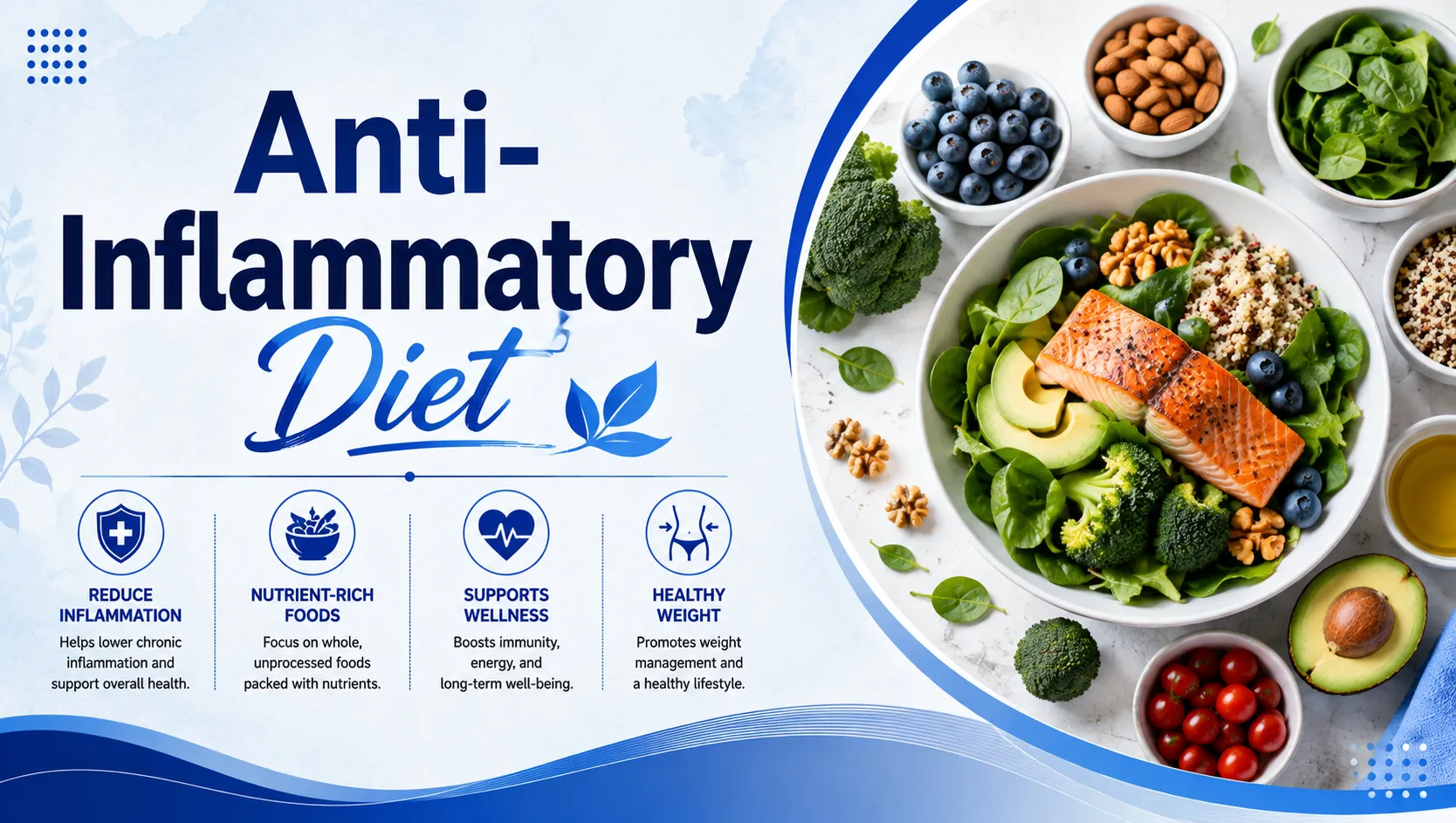
Inflammation is sort of the body’s natural reaction to injury, infection, or sickness. In the short term, it can help you patch up and recover, but if it keeps going for a long time, it may drag you into health trouble, like heart problems, diabetes, arthritis, obesity, and digestive annoyances.
That’s where an anti-inflammatory diet comes in, and yeah, it can really matter. By eating more anti-inflammatory foods and reducing the foods that fuel inflammation, you may end up feeling better overall, and you might lower the chance of getting long-term diseases.
What Is an Anti-Inflammatory Diet?
An anti-inflammatory diet is not a strict eating plan. Instead, it focuses on regularly including nutrient-rich foods such as fruits, vegetables, whole grains, healthy fats, and lean proteins while limiting highly processed foods, added sugars, and unhealthy fats.
It is not really a strict diet. More like a lifestyle rhythm, it concentrates on taking in natural and good items, like fruits, vegetables, healthy fats, whole grains, and lean protein, often and regularly, with a calmer kind of intention.
Why Is Chronic Inflammation Harmful?
Inflammation is not always harmful. It is the body's way of protecting itself from infections and injuries.
But when inflammation stays in the body for a long time, it may increase the risk of:
-
Heart disease
-
Type 2 diabetes
-
Obesity
-
Arthritis
-
Fatty liver disease
-
Some types of cancer
-
Digestive problems
-
Autoimmune diseases
Following an anti-inflammatory diet may help lower long-term inflammation and support better health.
Best Anti-Inflammatory Foods
Adding more anti-inflammatory foods to your daily meals is a simple way to support your health.
1. Fatty Fish
Mackerel, salmon, sardines, and tuna have omega-3 fatty acids that aid in reducing inflammation markers. They are a bit off the mark, but evident.
2. Colorful Fruits
Oranges, pomegranates, berries, as well as apples and grapes, provide antioxidants that protect cells from damage that occurs over time.
3. Green Vegetables
Spinach, kale, cabbage, broccoli, and other leafy greens are among the top anti-inflammatory foods that can be used for general health.
4. Nuts and Seeds
Almonds, walnuts, flaxseeds, and chia seeds are rich in healthy fats, as well as fiber, which provides strong support to the body.
5. Turmeric
Turmeric is rich in curcumin, which is a natural substance with anti-inflammatory properties.
6. Olive Oil
Extra-virgin olive oil has become a key component of the Mediterranean diet and is associated with lower levels of inflammation.
7. Whole Grains
Oats, quinoa, brown rice, and wheat are rich in fiber and will improve gut health and may reduce inflammation.
8. Green Tea
Green tea contains natural compounds that may help reduce inflammation and support heart health.
Foods That Cause Inflammation
Just as some foods help reduce inflammation, others may increase it.
Limiting these foods that cause inflammation may help you stay healthier.
1. Sugary Foods and Drinks
Eating too much sugar may increase inflammation.
Examples:
-
Soft drinks
-
Packaged juices
-
Sweets
-
Cakes
2. Processed Foods
Processed foods often contain added ingredients, unhealthy fats, and too much salt.
Examples:
-
Chips
-
Instant noodles
-
Packaged snacks
3. Refined Carbohydrates
Refined grains may increase inflammation in some people.
Examples:
-
White bread
-
White rice
-
Pastries
4. Fried Foods
Fried foods are usually high in unhealthy fats and calories.
Examples:
-
French fries
-
Fried chicken
-
Fried snacks
5. Processed Meats
Processed meats may increase inflammation and are linked to several health problems.
Examples:
-
Sausages
-
Salami
-
Bacon
6. Excess Alcohol
Drinking too much alcohol can increase inflammation throughout the body.
These are some of the most common inflammatory foods that are best eaten less often.
Sample Anti-Inflammatory Diet Plan
Breakfast
-
Oatmeal with berries
-
Green tea
Mid-Morning Snack
-
Apple
-
Handful of almonds
Lunch
-
Grilled fish
-
Brown rice
-
Mixed vegetable salad
Evening Snack
-
Green tea
-
Walnuts
Dinner
-
Vegetable soup
-
Whole wheat roti
-
Stir-fried vegetables
Benefits of an Anti-Inflammatory Diet
The anti-inflammatory diet can offer a variety of health benefits, including:
-
Better heart health
-
Improved blood sugar levels
-
Healthy weight control
-
Reduced joint stiffness and joint pain
-
Better digestion
-
More energy
-
Lower risk of developing long-term illnesses
A lot of people feel healthier when they substitute inflammatory foods with healthier choices in their diet.
Who Can Benefit From an Anti-Inflammatory Diet?
An anti-inflammatory diet could help people suffering from:
-
Arthritis
-
Diabetes
-
Heart disease
-
Obesity
-
Fat-liver disease
-
Digestive problems
-
Autoimmune disease
It's also a great diet program for those who want to enhance their overall health.
Conclusion
An anti-inflammatory diet is less about strict rules and more about making healthier food choices consistently. Including fruits, vegetables, whole grains, healthy fats, and other nutrient-rich foods while limiting highly processed foods may support overall health and a balanced inflammatory response.
If you have persistent digestive problems, ongoing inflammation, or other diet-related health concerns, it is important to seek professional medical advice rather than relying on dietary changes alone. Dr. Rajesh, who is regarded as one of the best General Surgeons in Gurgaon, has over 13 years of experience in diagnosing and treating a wide range of health and digestive conditions. Timely guidance can help identify underlying concerns and support the right treatment approach.
Frequently Asked Questions
1. What is an anti-inflammatory diet?
An anti-inflammatory diet focuses on eating nutrient-rich foods such as fruits, vegetables, whole grains, nuts, seeds, healthy fats, and fatty fish while limiting highly processed foods, added sugars, and unhealthy fats.
2. What are the best anti-inflammatory foods?
Some of the best anti-inflammatory foods include fatty fish such as salmon and sardines, leafy green vegetables, berries, nuts, seeds, olive oil, whole grains, and turmeric.
3. Which foods may promote inflammation?
Foods that may promote inflammation when consumed frequently include highly processed foods, sugary drinks and sweets, refined carbohydrates, fried foods, and processed meats.
4. Can an anti-inflammatory diet help with weight management?
An anti-inflammatory diet is not specifically a weight-loss diet, but choosing whole, nutrient-dense foods and limiting highly processed foods may support healthy weight management as part of a balanced lifestyle.
5. Can an anti-inflammatory diet improve digestive health?
Including fiber-rich foods, fruits, vegetables, whole grains, and healthy fats may support digestive health. However, people with specific digestive conditions may have different dietary needs.
6. How long does it take to see the benefits of an anti-inflammatory diet?
The time varies from person to person. Some people may notice improvements in digestion or overall well-being after making consistent dietary changes, while other health benefits may take longer. Diet should be considered part of an overall healthy lifestyle rather than a quick treatment.