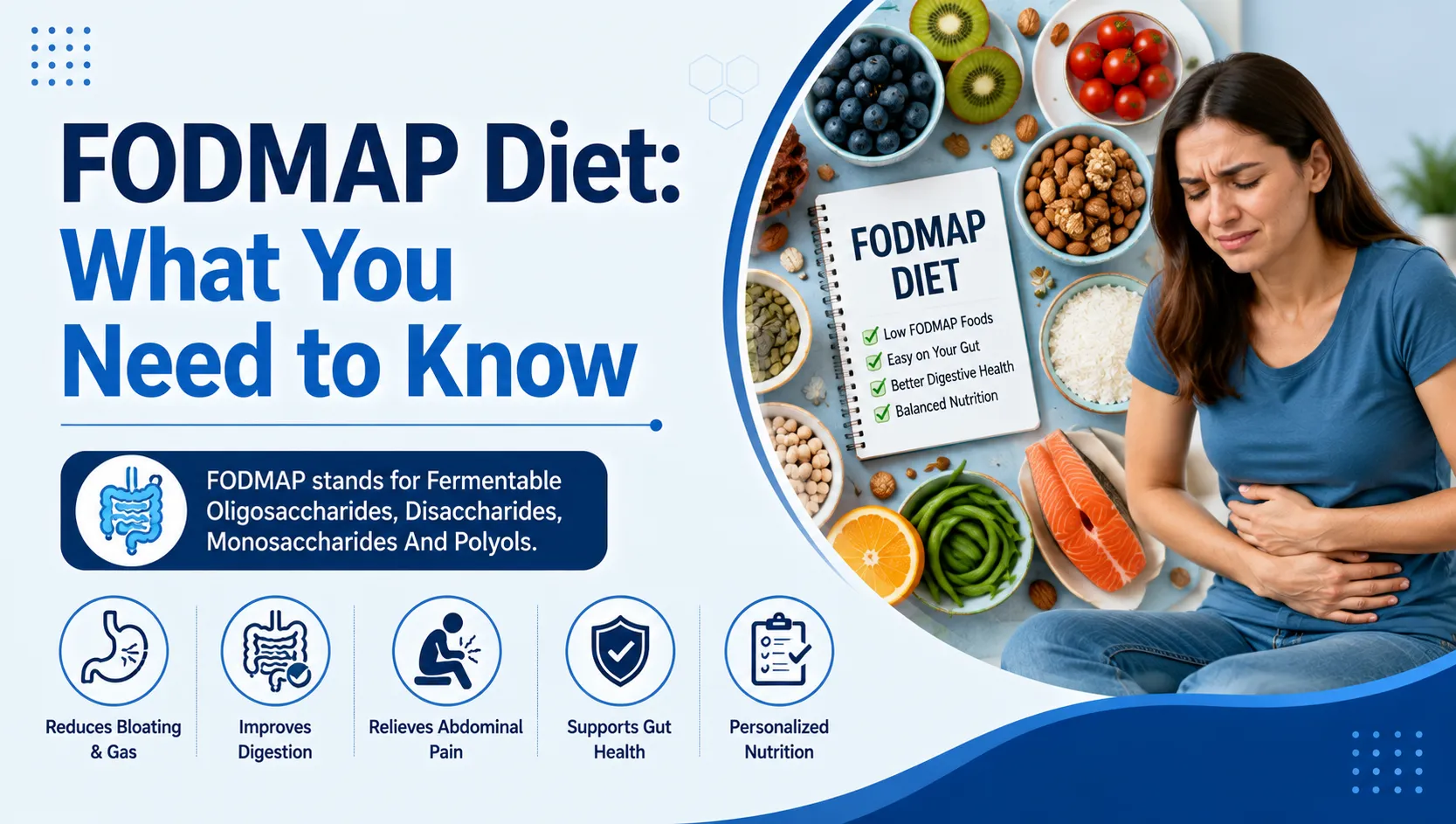
Bloating, gas, abdominal pain, and irregular bowel movements can make everyday life uncomfortable, especially when it is difficult to identify which foods are triggering the symptoms. For some people, certain carbohydrates in everyday foods may be harder to digest and can contribute to digestive discomfort.
A low FODMAP diet is a structured approach that can help identify these individual food triggers. It is commonly used for people with irritable bowel syndrome (IBS) and certain other digestive problems. The diet involves temporarily limiting high-FODMAP foods and then gradually reintroducing them to understand which foods are well tolerated and which may trigger symptoms.
What Is a FODMAP Diet?
An FODMAP diet can be described as a plan of eating for a limited time that removes certain foods for a time and then returns slowly. This allows you to identify foods that could be causing discomfort in the digestive tract.
The term FODMAP is a reference to:
-
Fermentable
-
Oligosaccharides
-
Disaccharides
-
Monosaccharides
-
And
-
Polyols
There are a variety of carbohydrates (a kind of nutrient that is found in a variety of food items). Certain people are unable to digest these in a proper manner. Once these carbohydrates are in through the intestine's large, these may be digested by gut bacteria that can cause gas, bloating, and other digestive problems.
What Are FODMAPs?
FODMAPs are a natural component of all kinds of foods we eat, which include certain fruits, vegetables, dairy products, and grains. A majority of people can eat these foods with no issues; however, some people are more sensitive to them.
Common examples of FODMAPs include:
|
FODMAP Type |
Foods |
|
Oligosaccharides |
Onion, garlic, wheat, beans |
|
Disaccharides |
Milk, yogurt, soft cheese |
|
Monosaccharides |
Honey, apples, mangoes |
|
Polyols |
Mushrooms, cauliflower, sugar-free sweeteners |
Not everyone reacts to the same foods. That's why the FODMAP diet focuses on finding your personal food triggers.
Why Was the Low FODMAP Diet Developed?
Diet that is low in FODMAP diet was developed to aid people who frequently suffer from digestive issues without knowing the exact cause.
Studies have demonstrated that cutting down on foods rich in FODMAPs could help in reducing:
-
Bloating
-
Stomach pain
-
Excess gas
-
Diarrhea
-
Constipation
-
General stomach discomfort
Many sufferers of IBS experience a reduction in their symptoms after several weeks of following the diet.
Who Can Benefit From a Low FODMAP Diet?
A diet that is low in FODMAP diet can be beneficial to those suffering from:
-
Irritable Bowel Syndrome (IBS)
-
Bloating that is frequent
-
Gas problems continue to plague the country.
-
Chronic diarrhea
-
A sensitive digestive system
-
Certain instances are a result of Small Intestinal Bacterial Overgrowth (SIBO)
Because everyone's digestive system is unique, it is advised to follow this plan with advice from a doctor or dietitian.
Common Symptoms Linked to FODMAP Sensitivity
People who are susceptible to FODMAPs might suffer from:
-
Bloating after meals
-
Excess gas
-
Stomach cramps
-
Stomach pain
-
Diarrhea
-
Constipation
-
It is possible to switch between constipation and diarrhea.
-
Feeling strangely full after having eaten
The symptoms could be caused by other digestive issues, so seeking medical advice is essential.
How Does the FODMAP Diet Work?
The FODMAP diet can be divided into three easy steps.
Step 1: Elimination Step
At this step, food products that contain a lot of FODMAPs are eliminated from the diet.
The idea is to find out whether symptoms improve.
Step 2: Introduction Step
Food products are reintroduced into the diet one by one.
Thus, it becomes possible to discover what products or FODMAPs cause symptoms.
Step 3: Personalization Step
Having discovered foods that cause symptoms, a personalized diet is planned.
It will make it possible to eat a great variety of food products, but avoid those that cause symptoms.
Low FODMAP Foods You Can Eat
There are plenty of healthy and tasty low FODMAP foods that can be included in your meals.
Fruits
Examples include:
-
Bananas
-
Oranges
-
Kiwi
-
Strawberries
-
Grapes
Vegetables
Examples include:
-
Spinach
-
Carrots
-
Tomatoes
-
Cucumbers
-
Bell peppers
Protein Sources
Most protein-rich foods are naturally low in FODMAPs, such as:
-
Eggs
-
Fish
-
Chicken
-
Lean meat
-
Tofu
Grains
-
Rice
-
Oats
-
Quinoa
-
Gluten-free bread
Dairy Alternatives
-
Lactose-free milk
-
Almond milk
-
Hard cheeses
These foods can help you maintain a balanced diet while keeping digestive symptoms under control.
Foods High in FODMAPs That May Trigger Symptoms
Some foods are more likely to cause symptoms in people who are sensitive to FODMAPs.
Fruits
-
Apples
-
Pears
-
Mangoes
-
Watermelon
Vegetables
-
Onion
-
Garlic
-
Cauliflower
-
Mushrooms
Dairy Products
-
Milk
-
Soft cheese
-
Ice cream
Legumes
-
Chickpeas
-
Kidney beans
-
Lentils
Sweeteners
-
Honey
-
Sorbitol
-
Mannitol
-
High-fructose corn syrup
These foods are not unhealthy. They simply may not be suitable for people who are sensitive to certain FODMAPs.
Is a Low FODMAP Diet Safe?
Yes, but only if the low FODMAP diet is followed properly. As it excludes a lot of foods in the first stage, the low FODMAP diet should not be followed for long without professional help.
The goal of the diet is to eliminate problem foods, not all foods containing FODMAPs.
Benefits of a FODMAP Diet
Studies suggest that well-adhering to the FODMAP diet could assist in:
-
Reduce the appearance of bloating
-
Ease stomach pain
-
Reduce gas
-
Improve bowel movements
-
Improve the quality of life of people who suffer from IBS
-
Determine your own food triggers
Many people feel more comfortable when they know which food items they can eat with ease.
Frequently Asked Questions
1. What is a FODMAP diet?
A low FODMAP diet is a structured eating approach that temporarily limits certain types of carbohydrates that can be difficult to digest. It is commonly used to identify foods that may trigger symptoms such as bloating, gas, abdominal pain, diarrhea, or constipation.
2. What are FODMAPs?
FODMAPs are a group of fermentable carbohydrates that are poorly absorbed by some people. They are found naturally in foods such as certain fruits, vegetables, dairy products, grains, and legumes.
3. What foods can you eat on a low FODMAP diet?
Low FODMAP options may include bananas, oranges, kiwi, strawberries, rice, oats, eggs, fish, chicken, carrots, spinach, and lactose-free dairy products. Individual tolerance can vary.
4. Who can benefit from a low FODMAP diet?
A low FODMAP diet may help people with digestive symptoms associated with conditions such as irritable bowel syndrome (IBS), particularly those experiencing recurring bloating, gas, abdominal pain, diarrhea, or constipation.
5. How does the low FODMAP diet work?
The diet generally involves three stages: temporarily reducing high-FODMAP foods, gradually reintroducing them to identify individual triggers, and then creating a personalized diet based on food tolerance.
6. Is the low FODMAP diet meant to be followed permanently?
No. The low FODMAP diet is generally intended as a short-term, structured approach rather than a permanent restrictive diet. After identifying trigger foods, tolerated foods are gradually added back to create a more varied and balanced diet.
Conclusion
The FODMAP diet can be helpful for people who experience digestive symptoms such as bloating, gas, abdominal pain, diarrhea, or constipation, particularly those with IBS. By gradually eliminating and reintroducing certain foods, you can identify personal triggers and create a more comfortable, balanced diet.
However, the low FODMAP diet is not meant to be a permanent restrictive diet, and it is best followed with professional guidance. If your digestive symptoms continue despite dietary changes, consult a specialist. Dr. Rajesh, who is regarded as one of the best General Surgeons in Gurgaon, has more than 13 years of experience in diagnosing and treating a wide range of digestive and gastrointestinal conditions.