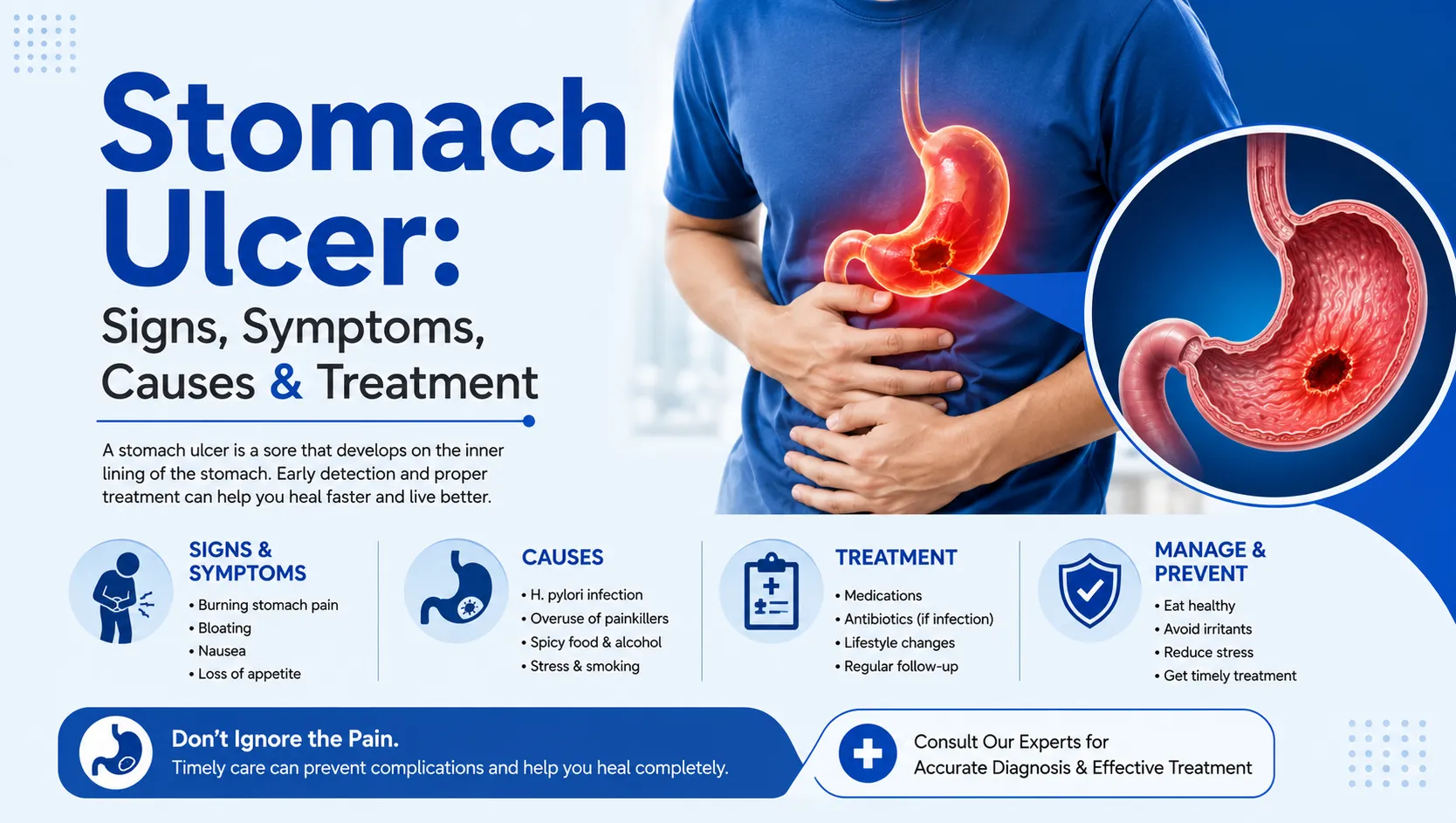
A stomach ulcer is an open sore that develops in the lining of the stomach, often caused by an H. pylori infection or the long-term use of pain-relieving medications. While many people mistake the symptoms for acidity or indigestion, persistent burning stomach pain, bloating, nausea, or discomfort after eating could indicate an underlying ulcer. Early diagnosis and timely treatment are important to prevent complications such as bleeding or damage to the stomach lining. In this article, we'll discuss the signs and symptoms of stomach ulcers, their causes, diagnosis, treatment options, and preventive measures.
What Is a Stomach Ulcer?
A stomach ulcer is an open sore that develops in the inner lining of the stomach when its protective mucus layer becomes damaged. As this protective barrier weakens, stomach acid can irritate the exposed tissue, leading to the formation of an ulcer.
Some stomach ulcers cause noticeable symptoms such as burning pain in the upper abdomen, bloating, indigestion, nausea, or a feeling of fullness after eating small amounts of food. Others may remain unnoticed until they become more severe. Although most stomach ulcers respond well to treatment, delaying medical care can increase the risk of complications such as bleeding, perforation, or obstruction.
Quick Facts About Stomach Ulcers
|
Fact |
Details |
|
Condition |
Open sore in the stomach lining |
|
Common Causes |
H. pylori infection, long-term painkiller use |
|
Main Symptom |
Burning stomach pain |
|
Treatable? |
Yes, most ulcers respond well to treatment |
|
Can It Be Serious? |
Yes, if left untreated |
Common Signs and Symptoms of a Stomach Ulcer
It is believed by many individuals that spicy food is the leading cause of a stomach ulcer; however, the reality is far different. Some of the causes of a stomach ulcer include:
1. H. pylori Infection
This bacterium can harm the mucous membrane of the stomach lining and lead to stomach ulcers.
2. Consistent Use of Pain Killers
Regular use of painkillers such as aspirin, ibuprofen, and naproxen can weaken the stomach lining and increase the chances of developing ulcers.
3. Smoking
This habit increases stomach acids and makes the healing of ulcers more difficult.
4. Overconsumption of Alcohol
Alcohol consumption may be the reason behind the irritation in the stomach lining and cause ulcers.
5. Intense Stress and Specific Diseases
Though stress cannot cause ulcers, it can worsen the ulcers and hinder the recovery process.
Stomach Ulcer Symptoms
The symptoms of a stomach ulcer may differ between individuals. Some individuals may experience only some mild symptoms, while others suffer from severe discomfort.
Common Ulcer Symptoms
-
The upper stomach
-
The pain can be felt between meals or during the night
-
Bloating
-
Feeling full after eating just a tiny amount
-
Indigestion
-
Nausea
-
Burping frequently
-
A decreased appetite
-
Unexplained weight loss
The ulcers symtoms are frequently confused with acidity or other typical stomach issues.
Severe Symptoms That Need Immediate Medical Attention
Seek immediate medical assistance in case you have any of the following signs:
-
Vomiting blood
-
Dark stools
-
Severe abdominal pain that occurs suddenly
-
Trouble breathing
-
Feeling dizzy
Who Is at Higher Risk of Developing Ulcers?
Your risk of developing a peptic ulcer is higher if you:
-
Are over 60 years old
-
Take painkillers often
-
Smoke habitually
-
Drink alcohol in excess
-
Have an infection of the H. pylori bacteria
-
Have a family history of ulcers
How Is a Stomach Ulcer Diagnosed?
Doctors may employ different tests to identify a stomach ulcer.
Medical History and Physical Examination
Your doctor will inquire about your health issues, medication, and your overall health.
H. pylori Testing
Tests can comprise:
-
Breath test
-
Blood test
-
Stool test
Endoscopy
An endoscopy test is among the most precise methods to identify an ulcer in the stomach. In this procedure, the tube, which is thin and has an image camera, passes through the mouth to look at the stomach lining.
Imaging Tests
Sometimes extra scans or X-rays might be suggested to look for any other digestive issues.
Stomach Ulcer Treatment
Treatment will depend on the cause of the ulcer.
Antibiotics
When H. pylori infection is involved, antibiotics are prescribed.
Acid-Lowering Drugs
The following are effective when dealing with ulcers because they lower stomach acid levels.
Some choices include:
-
Proton pump inhibitors (PPIs)
-
H2 blockers
-
Antacids
Change in Some Drugs
In cases where medication is causing an ulcer, a different choice will be recommended.
Lifestyle Alterations
Lifestyle alterations can help ease symptoms and encourage healing.
Some alterations involve:
-
Quitting smoking
-
Drinking less alcohol
-
Eating proper meals
-
Controlling stress
-
Not consuming irritating foods
Foods to Eat and Avoid With a Stomach Ulcer
Foods That May Help
-
Fresh fruits and other vegetables
-
Whole grains
-
Yogurt, probiotic-rich foods, and yogurt
-
Lean fish and meat, as well as fish
-
High-fiber foods
Foods to Limit
-
Very spicy food
-
Fried food items
-
Alcohol
-
Too much coffee or caffeine
-
Soft drinks and fizzy beverages
Food alone will not be used to treat ulcers; choosing the right foods can ease irritation and aid in the recovery process.
Can a Stomach Ulcer Heal Completely?
Yes, stomach ulcers can be healed fully if treated properly. The important thing is that you should never ignore any ulcer symptoms, because an untreated ulcer can lead to complications like bleeding, intestinal blockage, or a hole in the stomach.
Conclusion
Stomach ulcers are a common digestive condition, but with early diagnosis and appropriate treatment, most people recover completely. Recognizing symptoms such as persistent stomach pain, bloating, nausea, or indigestion and seeking timely medical care can help prevent serious complications.
If your symptoms continue despite lifestyle changes or become more severe, it is important to consult a specialist. Dr. Rajesh, who is regarded as one of the best General Surgeons in Gurgaon, has over 13 years of experience in diagnosing and treating a wide range of digestive disorders. Early evaluation can help identify the underlying cause and ensure appropriate treatment.
Frequently Asked Questions
1. What are the first signs of a stomach ulcer?
Early symptoms of a stomach ulcer may include a burning pain in the upper abdomen, bloating, indigestion, nausea, and discomfort that often worsens when the stomach is empty.
2. What causes stomach ulcers?
The most common causes include H. pylori infection, long-term use of painkillers (NSAIDs), smoking, excessive alcohol consumption, and certain medical conditions.
3. Can a stomach ulcer heal on its own?
Some mild ulcers may improve, but most require proper medical treatment to heal completely and prevent complications.
4. What foods should I avoid if I have a stomach ulcer?
It is generally recommended to limit spicy foods, fried foods, alcohol, excessive caffeine, and carbonated drinks if they worsen your symptoms.
5. When should I see a doctor for a stomach ulcer?
Seek medical attention if you experience severe stomach pain, vomiting blood, black stools, unexplained weight loss, persistent vomiting, or symptoms that do not improve with treatment.
Related Services
From your services, these are the most relevant: