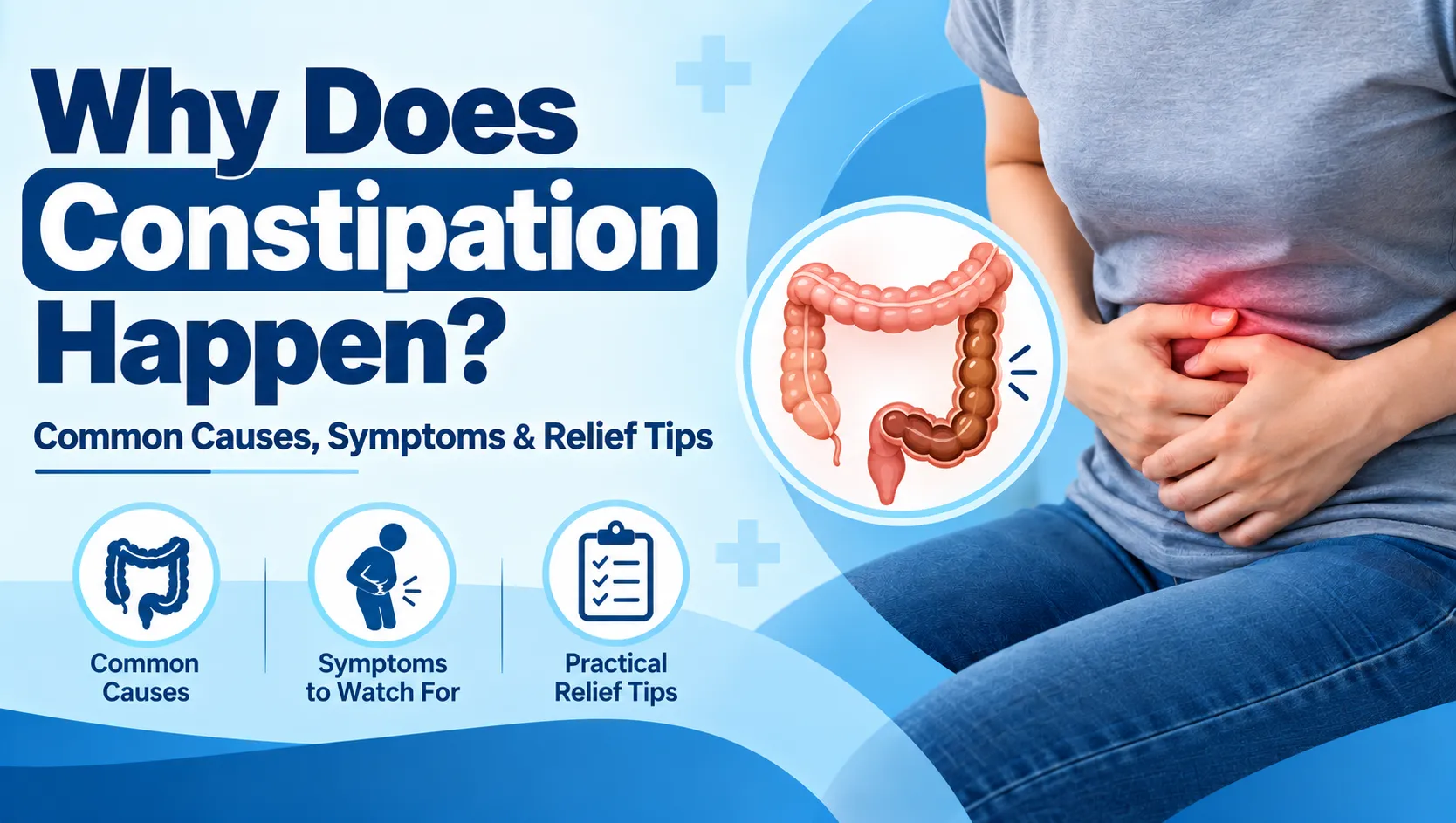
Constipation happens when the colon absorbs too much water from waste, making the stool hard, dry, and difficult to pass. It is a common digestive problem that may also cause straining, bloating, abdominal discomfort, or a feeling of incomplete bowel movement.
Common causes include low fiber intake, inadequate fluids, lack of physical activity, certain medicines, and changes in daily routine. Understanding why constipation happens can help you manage the problem and reduce the chances of it recurring.
What Is Constipation?
Constipation is a change in bowel habits in which stools may become hard, dry, or difficult to pass. A person may need to strain during a bowel movement or may feel that stool has not passed completely.
Having a bowel movement every day is not necessary for everyone. Normal bowel habits vary between individuals. Constipation is therefore not determined only by how often you go to the toilet; stool consistency, difficulty passing stool, excessive straining, and a feeling of incomplete evacuation are also important.
Why Does Constipation Happen?
Constipation can develop for many reasons. In some people, it is related to everyday diet and lifestyle habits, while in others, medicines or an underlying medical condition may contribute.
1. Not Getting Enough Fiber
Dietary fiber helps add bulk to stool and supports regular bowel movements. A diet containing very little fruit, vegetables, whole grains, pulses, and other fiber-rich foods may contribute to constipation.
Increasing fiber should generally be gradual because suddenly consuming a large amount can cause bloating and gas in some people.
2. Not Drinking Enough Fluids
Inadequate fluid intake can contribute to hard, dry stools in some people, making them more difficult to pass.
Drinking adequate fluids is particularly important when increasing dietary fiber. However, simply drinking excessive amounts of water is not a treatment for every type of constipation.
3. Lack of Physical Activity
A sedentary lifestyle may contribute to constipation in some people. Regular physical activity supports normal digestive and bowel function.
Even simple activities such as regular walking can be helpful as part of an overall healthy lifestyle.
4. Ignoring the Urge to Pass Stool
Regularly delaying a bowel movement can interfere with normal bowel habits. This may happen because of work, travel, lack of access to a comfortable toilet, or simply being busy.
When you consistently ignore the urge, stool may remain in the colon longer and become harder to pass.
5. Changes in Daily Routine
Travelling, changes in meal timings, disrupted sleep, reduced activity, and other changes to your normal routine can temporarily affect bowel movements.
This is one reason some people experience constipation while travelling or after a major change in their schedule.
6. Certain Medicines and Supplements
Some medicines and supplements can cause or worsen constipation. Examples can include certain pain medicines, iron supplements, and some other medications.
If constipation begins after starting a new medicine, do not stop prescribed treatment on your own. Speak with your doctor about the symptoms and possible alternatives where appropriate.
7. Certain Medical Conditions
Persistent constipation can sometimes be associated with conditions affecting the digestive system, metabolism, nerves, or muscles involved in bowel movements.
This does not mean that frequent constipation necessarily indicates a serious disease. However, constipation that persists despite appropriate diet and lifestyle changes deserves medical evaluation.
What Are the Common Symptoms of Constipation?
Constipation does not always mean simply “not going to the toilet.” People can experience it in different ways.
Common constipation symptoms may include:
-
Hard, dry, or lumpy stools
-
Difficulty passing stool
-
Straining during bowel movements
-
Fewer bowel movements than usual
-
Feeling that the bowel has not emptied completely
-
Abdominal discomfort
-
Bloating
-
A feeling of fullness or heaviness in the abdomen
Symptoms that are persistent or significantly different from your usual bowel habits should not be ignored.
Why Do I Keep Getting Constipated?
If constipation keeps coming back, it is worth looking beyond temporary relief and identifying possible triggers.
Repeated constipation may be associated with a consistently low-fiber diet, inadequate fluid intake, limited physical activity, regularly delaying bowel movements, certain medications, or changes in daily routine.
Sometimes there may not be one obvious lifestyle trigger. If constipation repeatedly returns despite appropriate changes to your diet and routine, speak with a doctor to determine whether further evaluation is needed.
Can Constipation Cause Gas and Bloating?
Yes. Constipation can occur alongside gas and bloating. When stool moves slowly through the digestive tract, some people may experience abdominal fullness, discomfort, or increased bloating.
If constipation is accompanied by severe abdominal swelling, significant pain, repeated vomiting, or an inability to pass stool or gas, urgent medical assessment may be necessary.
How to Get Relief From Constipation
People searching for how to get relief from constipation often look for a quick solution. However, the right approach depends on why the constipation is occurring.
For occasional constipation, the following measures may help support regular bowel movements.
1. Gradually Increase Fiber Intake
Include appropriate sources of dietary fiber such as:
-
Fruits
-
Vegetables
-
Whole grains
-
Pulses and beans
-
Other fiber-rich foods suitable for your diet
Increase fiber gradually rather than suddenly. A rapid increase can cause more gas and bloating in some people.
2. Drink Adequate Fluids
Maintain adequate fluid intake throughout the day, particularly if your diet contains more fiber.
Individual fluid requirements vary depending on factors such as activity, climate, health conditions, and diet.
3. Stay Physically Active
Regular physical activity can support healthy bowel function. Walking and other suitable forms of exercise can be incorporated into your daily routine according to your health and fitness level.
4. Do Not Ignore the Urge to Use the Toilet
Try to use the toilet when you naturally feel the urge rather than repeatedly postponing it.
Developing a regular bowel routine can be helpful for some people.
5. Review Your Daily Diet
Pay attention to whether your everyday diet contains enough fiber-rich whole foods and fluids. A diet dominated by highly processed, low-fiber foods may contribute to constipation in some individuals.
What Is the Best Juice for Constipation?
There is no single best juice for constipation that works for everyone. Whole fruits generally have an advantage because they retain more dietary fiber than many juices.
Some fruit juices, particularly those containing naturally occurring sorbitol, may help bowel movements in some people. Prune juice is one commonly used example. However, response varies between individuals, and drinking large amounts of juice can add considerable sugar to the diet.
For long-term bowel health, focus on overall fiber intake, adequate fluids, physical activity, and regular bowel habits rather than relying only on juice.
What Should You Eat When Constipated?
A balanced diet containing adequate fiber can support regular bowel movements.
Depending on individual dietary needs, useful foods may include fruits, vegetables, whole grains, pulses, beans, and other fiber-rich foods.
It is better to improve the overall quality of your diet rather than depend on one “constipation food.” Also remember that increasing fiber very quickly can make bloating and gas worse, so changes should be gradual.
What Should You Avoid When Constipated?
There is no universal list of foods that every person with constipation must avoid. Instead, consider the overall balance of your diet.
A diet containing large amounts of highly processed, low-fiber foods while lacking fruits, vegetables, whole grains, and other fiber sources may make it harder to maintain regular bowel movements.
If a particular food consistently appears to worsen your symptoms, keep track of it and discuss persistent problems with a doctor or qualified dietitian rather than unnecessarily eliminating multiple foods.
How Can Constipation Be Prevented?
Many episodes of constipation can be reduced by maintaining healthy bowel habits. Helpful measures include:
-
Eat an appropriately fiber-rich diet
-
Drink adequate fluids
-
Stay physically active
-
Avoid regularly ignoring the urge to pass stool
-
Maintain a consistent daily routine where possible
-
Increase dietary fiber gradually
-
Avoid unnecessary prolonged straining
-
Pay attention to persistent changes in bowel habits
These measures may help with common constipation, but persistent symptoms can require a different approach depending on their cause.
When Should You See a Doctor for Constipation?
Occasional constipation is common, but medical evaluation is advisable when the problem is persistent, keeps returning, or occurs with concerning symptoms.
Consult a doctor if you experience:
-
Blood in the stool or rectal bleeding
-
Persistent or severe abdominal pain
-
Unexplained weight loss
-
Repeated vomiting
-
A significant or persistent change in bowel habits
-
Constipation that does not improve despite appropriate lifestyle changes
-
Significant pain while passing stool
-
Symptoms that repeatedly interfere with daily life
Seek prompt medical attention for severe abdominal pain or swelling accompanied by vomiting or an inability to pass stool or gas.
Conclusion
Constipation is a common digestive concern that can often be improved by making simple changes to diet, fluid intake, physical activity, and bowel habits. However, constipation that keeps returning, lasts for a long time, or occurs with symptoms such as rectal bleeding, severe abdominal pain, vomiting, or unexplained weight loss should not be ignored.
If you are experiencing persistent constipation or related digestive concerns, proper medical evaluation can help identify the underlying cause and guide suitable treatment. You can consult Dr. Rajesh, Best General Surgeon in Gurgaon, for evaluation and appropriate management of gastrointestinal and related surgical conditions.
Frequently Asked Questions (FAQs)
1. Does Makhana Cause Constipation?
Makhana (fox nuts) does not usually cause constipation on its own. However, eating large amounts without enough fluids or other fiber-rich foods may contribute to digestive discomfort in some people.
2. Does Banana Cause Constipation?
It can depend on the banana’s ripeness and individual response. Ripe bananas contain fiber, while less-ripe bananas contain more resistant starch and may worsen constipation in some people.
3. How to Relieve Constipation During Pregnancy Immediately?
There is no guaranteed instant remedy for constipation during pregnancy. Drinking adequate fluids, gradually increasing dietary fiber, and gentle physical activity may help. Consult your doctor before using laxatives, supplements, or herbal remedies during pregnancy.
4. How to Relieve Constipation on the Toilet Immediately?
There is no guaranteed instant solution, but changing your toilet position may make passing stool easier. Place your feet on a small stool so your knees are slightly higher than your hips, lean forward, relax, and avoid excessive straining. If you cannot pass stool, get up and try again when you feel a natural urge.
5. Why Am I Constipated Even Though I Drink Plenty of Water?
Constipation is not caused only by inadequate water intake. Low fiber intake, lack of physical activity, certain medicines, bowel habits, and some medical conditions can also contribute.
6. Why Is My Stool Hard Even When I Go Every Day?
You can still experience constipation even if you have a bowel movement every day. Hard or dry stools, excessive straining, or difficulty passing stool can also indicate constipation.
7. Why Do I Feel Like I Still Need to Poop After a Bowel Movement?
This is known as a feeling of incomplete evacuation and can occur with constipation. If it happens frequently or persists, consider discussing it with a doctor.
8. Can Stress Cause Constipation?
Yes, stress may affect digestive function and bowel habits in some people. Stress can also change eating patterns, sleep, physical activity, and daily routines, which may contribute to constipation.
9. Why Do I Get Constipated While Travelling?
Changes in diet, hydration, physical activity, sleep, and toilet routine during travel can temporarily affect bowel movements and contribute to constipation.
10. Can Iron Tablets Cause Constipation?
Yes. Iron supplements can cause constipation in some people. If this happens with prescribed iron, speak with your healthcare professional rather than stopping the supplement on your own.
11. Can Constipation Cause Piles?
Chronic constipation and repeated straining can contribute to hemorrhoids (piles). Keeping stools soft and avoiding excessive straining may help reduce this risk.
12. Can Constipation Cause Anal Fissures?
Yes. Passing hard or large stools can sometimes cause a small tear in the lining of the anus called an anal fissure, which may result in pain and bright-red bleeding during bowel movements.
13. Is It Necessary to Have a Bowel Movement Every Day?
No. Normal bowel frequency varies from person to person. Constipation is also determined by factors such as hard stools, difficulty passing stool, excessive straining, and incomplete evacuation.
14. Can Constipation Reduce Appetite?
Constipation may cause bloating or abdominal fullness, which can reduce appetite in some people. Persistent loss of appetite, particularly with unexplained weight loss, should be medically evaluated.
15. Is Blood in Stool Normal During Constipation?
Hard stools may cause bleeding from hemorrhoids or an anal fissure, but blood in the stool should not automatically be assumed to be from constipation. Recurrent, unexplained, or significant rectal bleeding should be evaluated by a doctor.
Related blogs
Related Services