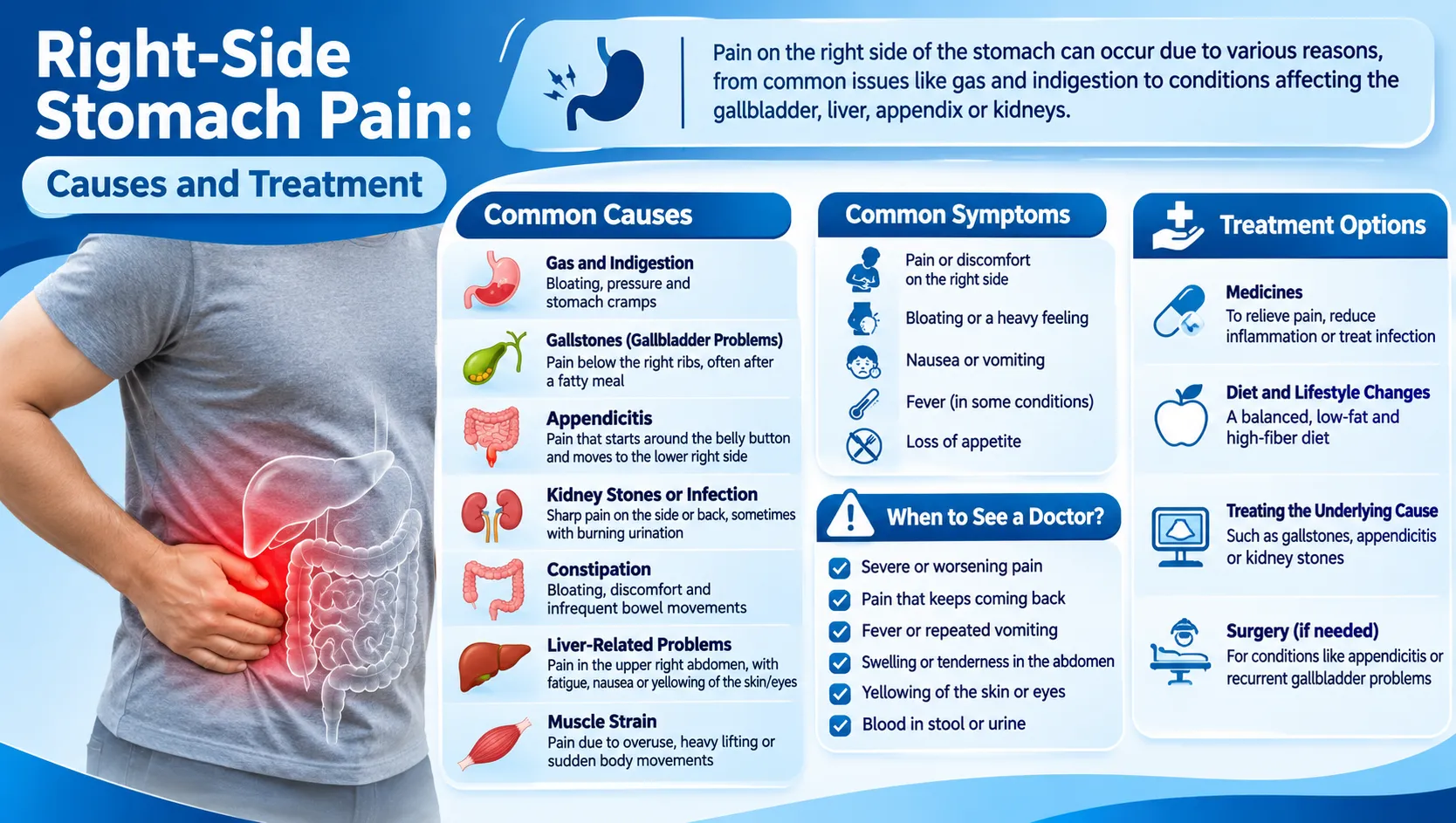
Right side abdominal pain has many causes. Lower right pain usually has something to do with your appendix. So, seek medical care right away if you have severe pain in that area. Upper right pain can be mild to severe. Some causes are more serious than others. Your healthcare provider can investigate the cause and start treatment, if necessary.
Where Do You Feel Pain on the Right Side of Your Stomach?
In the right upper quadrant of the abdomen are organs like the liver, gallbladder, intestine, right kidney, and appendix. In case of females, the right ovary and fallopian tube are also present in this region.
Doctors usually divide the abdomen into two regions while diagnosing the cause of the pain:
-
Upper right abdomen: This region is just below the right ribs, and the pain can be associated with the gallbladder, liver, kidney, or intestine.
-
Lower right abdomen: This region is near the right hip bone and pelvis, and pain can arise from the appendix, intestine, and reproductive organs of females.
It gives an idea of which disease should be checked, but the region alone does not confirm the disease.
Common Causes of Right-Side Stomach Pain
The reason for right-side pain can be different from one person to another. Some causes are minor, while others need medical attention.
1. Gas and Indigestion
Gas may form within the digestive system and lead to pressure, bloating, or even cramping. The pain may move around within the stomach. Fast eating, overeating, or foods that form gas may worsen the condition.
Heartburn may result in a heavy feeling, burping, a burning sensation, or pain when eating. It is wrong to assume that all the pains in the same spot should be attributed to gas.
2. Gallstones and Gallbladder Inflammation
The gallbladder is located under the liver on the upper right side of the abdominal region. Gallstones may cause the flow of bile to be blocked, resulting in pain, especially following a big or greasy meal.
This pain usually starts under the right rib cage and then radiates to the back or the right shoulder. Nausea and vomiting are other symptoms. The inflammation of the gallbladder results in more severe pain and fever.
If pain keeps recurring in this area, especially following a meal, medical attention should be sought.
3. Appendicitis
Appendicitis occurs when the appendix becomes inflamed. It is an important cause of pain in the lower right abdomen.
The pain starts in the belly button area and then slowly shifts to the lower right part of the abdomen. Pain may be intensified when one walks, coughs, or changes position. In addition to pain, there may also be nausea, vomiting, lack of appetite, and fever.
Appendicitis requires immediate medical attention. The bursting of the appendix will result in a severe infection within the abdominal cavity.
4. Kidney Stones or Kidney Infection
The right kidney lies in the back part of the upper abdomen. The pain resulting from a kidney stone occurs on one’s side or back and moves to the lower part of the abdomen or groin area. The pain will occur in waves and is often accompanied by vomiting or blood in the urine.
The symptoms of kidney infection include pain on one’s side or back with fever, chills, burning while urinating, and frequent urination.
5. Constipation
When stool builds up in the intestine, it can cause bloating, pressure, and abdominal cramps. Some people feel the discomfort more on the right side.
Hard stools, fewer bowel movements, and straining during toilet visits are common signs. If constipation continues, or occurs with vomiting, severe pain, blood in the stool, or unexplained weight loss, a doctor should check it.
6. Liver-Related Problems
The liver is found in the upper right quadrant of the abdominal region. Illnesses like hepatitis and other diseases related to the liver can result in pain in the same region.
Fatigue, nausea, lack of appetite, and dark urine, along with yellow coloration of the skin and eyes, are some of the other symptoms that a person might experience.
7. Muscle Strain
It is not always the case that abdominal pain results from an internal organ. Pain in the abdomen due to a strained muscle is common, especially among people who engage in strenuous activities such as weightlifting and sudden body movements.
The pain might be made worse by movements like bending, coughing, stretching, or tensing of the abdominal muscles.
Right-Side Pain That Comes and Goes: What Could It Mean?
Right-sided pain that comes and goes may be related to gas, bowel movements, kidney stones or gallbladder problems. The pattern can provide useful information.
The pain from the gallbladder will be experienced after a meal, especially when the meal consists of fatty foods. Pain from kidney stones may be experienced in episodes and may move down into the groin. Gas pains may get better with passing gas or stool.
When the pain is recurring in the same area, becoming more painful, and interfering with your day-to-day tasks, you should schedule an appointment with a doctor.
Pain in Lower Right Abdomen Near Hip Bone in Females
There are many possible reasons behind pain on the lower right side of the stomach, close to the hip bone in women. Some of them are connected to gas, constipation, or period pain. However, there are also ovarian cysts, infection, and appendicitis as possible causes of the problem.
Among others, some of the causes include:
-
Ovarian cyst: This can be a cyst that grows on the right ovary and leads to pain or a pressure sensation in the lower abdomen.
-
Period or ovulation pain: Sometimes the pain occurs on one side of the lower abdomen during the menstrual period.
-
Endometriosis: Pain in the lower abdomen, especially during menstrual periods.
-
Pelvic infection: Lower abdominal pain, fever, and abnormal discharge from the vagina due to an infection in the reproductive organs.
-
Ectopic pregnancy: This is a condition in which a fertilized egg starts to develop in a place other than the uterus. The pain occurs on one side of the lower abdomen and can become life-threatening very fast.
In case the pain is sudden or severe, it goes together with dizziness or fainting and vaginal bleeding seek medical help immediately. Pregnant women cannot ignore one-sided lower abdominal pain.
How Is the Cause of Right-Side Abdominal Pain Diagnosed?
To understand why your right abdominal pain occurs, your doctor will ask you about the pain first. He may ask questions concerning when you got the pain, where it is located, and if it is getting worse when eating, walking, or urinating.
Depending on your symptoms, your doctor may also advise you to undergo certain tests.
-
Physical exam: Your doctor palpates your abdomen to detect areas that hurt and swell.
-
Blood test: It is necessary to examine whether you have an infection, inflammation, or liver disease.
-
Urinalysis: It is needed to diagnose an infection of the urinary system or kidney stones.
-
Ultrasound: With the help of ultrasound, your doctor will check the health condition of organs such as the gallbladder, liver, kidneys, and ovaries.
-
Computed tomography: If the causes of your pain are still unknown, computed tomography can help detect problems with the appendix and other internal organs.
-
Pregnancy test: A pregnancy test may be prescribed for women when pregnancy is possible.
All the tests mentioned above are not necessarily prescribed to all patients.
Treatment for Right-Side Stomach Pain
There is no single treatment for pain on the right side of the abdomen. The doctor needs to identify the cause before deciding what will help.
-
Gas and indigestion: Treatment may include changes in eating habits, avoiding foods that trigger symptoms and medicines when needed.
-
Constipation: More fibre, adequate water and regular physical activity may help. Persistent constipation needs medical assessment.
-
Gallstones: Some people need monitoring, while those with repeated symptoms or complications may need gallbladder surgery.
-
Appendicitis: It usually needs urgent hospital treatment. Surgery to remove the appendix is commonly recommended.
-
Kidney stones: Treatment depends on the stone's size and location. It may include pain relief, medical treatment or a procedure to remove or break the stone.
-
Kidney or other infections: The treatment depends on the type of infection and may include antibiotics.
-
Muscle strain: Rest and appropriate pain relief may help a mild strain. The doctor can advise when normal activity can be resumed.
Avoid taking repeated painkillers or acidity medicines without knowing why the pain is happening. They may reduce discomfort for a while without treating the actual problem.
When Should You See a Doctor for Right-Side Stomach Pain?
Mild discomfort that settles quickly may not always be serious. However, do not ignore pain that keeps returning, lasts for a long time or becomes worse.
Seek urgent medical attention if you notice:
-
Severe or sudden abdominal pain.
-
Pain that starts near the belly button and moves to the lower right side.
-
Fever with abdominal pain.
-
Repeated vomiting or inability to keep fluids down.
-
A swollen or very tender abdomen.
-
Blood in the urine or stool.
-
Yellowing of the skin or eyes.
-
Dizziness, fainting or difficulty breathing.
-
One-sided lower abdominal pain when pregnancy is possible.
Do not wait at home if the pain is severe or getting worse. Early assessment can help identify conditions that need urgent treatment.
Conclusion
Right-sided stomach pain can occur due to several reasons, including gas, constipation, gallstones, appendicitis and other abdominal conditions. While some causes may be minor, persistent, recurring or worsening pain should never be ignored. Timely medical evaluation helps identify the underlying cause and determine the right treatment. If you are experiencing repeated pain on the right side of your stomach, consult Dr. Rajesh, an experienced General Surgeon in Gurgaon, with over 13 years of experience, for proper evaluation and guidance on suitable treatment options.
Frequently Asked Questions (FAQs)
1. How to cure stomach right-side pain?
The treatment for right-side stomach pain depends on its underlying cause. If it is due to gas or indigestion, dietary changes and avoiding foods that trigger symptoms may help. However, conditions such as gallstones, kidney stones or appendicitis may require medical treatment. If the pain is severe, persistent or worsening, consult a doctor instead of relying only on home remedies.
2. What should I do if my right side stomach hurts?
First, pay attention to the location, duration and severity of the pain. Notice whether it becomes worse after eating, walking, coughing or passing urine. Avoid heavy meals if they increase discomfort. If the pain continues, keeps returning or becomes severe, seek medical evaluation to identify the cause.
3. What is the reason for right-side stomach pain?
Right-side stomach pain can occur due to several conditions, including gas, indigestion, constipation, gallstones, appendicitis, kidney stones, liver problems or muscle strain. In women, ovarian cysts, pelvic infections and other reproductive health conditions may also cause lower-right abdominal pain. A medical examination helps identify the actual reason.
4. Can gas cause right-side stomach pain?
Yes, gas can cause cramps, bloating and discomfort on the right side of the stomach. The pain may improve after passing gas or having a bowel movement. However, if the pain continues, becomes severe or is accompanied by fever or vomiting, seek medical attention.
5. When should I worry about right-sided stomach pain?
You should be concerned if right-sided stomach pain is severe, persistent or keeps returning. Seek urgent medical attention if you experience fever, repeated vomiting, a swollen or very tender abdomen, yellowing of the eyes or skin, blood in the stool or urine, or pain that moves from around the belly button to the lower-right abdomen.
6. What organs can cause pain on your right side?
Several organs can cause right-sided abdominal pain, including the liver, gallbladder, appendix, right kidney and parts of the intestine. In women, the right ovary and fallopian tube can also cause pain in the lower-right abdomen. The location of the pain can provide useful clues, but medical evaluation is needed to determine the exact cause.
7. What are the early warning signs of appendicitis?
Early signs of appendicitis may include pain around the belly button that gradually moves to the lower-right abdomen. Other symptoms can include nausea, vomiting, loss of appetite and fever. The pain may become worse while walking, coughing or changing position. Appendicitis requires prompt medical assessment, so do not ignore these symptoms.